Shelf jetlag is real. And it's the most expensive thing that never shows up in a pitch deck.
You built real proof somewhere — the UK, the EU, Brazil, Japan, Australia, wherever your product actually works. Real repeat purchase. Real shelf presence. Real evidence the idea is good. None of that is the risk.
The risk is the assumption that rides in behind it: that the same claims, the same format, the same price logic, and the same buyer story will land in the US unchanged, just because they landed at home. They usually don't — not because the US market is smarter or harder, but because it's a different context, with its own shelf logic, its own claim maturity curve, and its own buyer expectations. And none of that shows up until your product is standing in front of it.
That's shelf jetlag: a product that works perfectly at home, arriving out of context. The danger was never that things are different. It's not knowing what transfers and what has to change — until you've already committed to packaging, inventory, brokers, and an import run to find out.
Trends are loud, and they don't travel well. Patterns are quiet, and they usually do. The products that survive the crossing are built on the pattern, not the trend.
Five places translation quietly breaks
Why this is worth checking before you commit, not after
Here's the actual cost comparison. A market research firm: $15,000–$50,000 and several weeks. A strategy consultant: $5,000–$15,000 per engagement. A focus group: $20,000 and six weeks you probably don't have if you're actively planning a crossing. Every one assumes a budget most founders don't have sitting around before they've proven anything in this specific market.
The alternative most founders default to is worse — find out live, after committing to packaging, inventory, brokers, and an import run, which turns a $500 question into a $50,000 mistake, discovered the hard way, with real capital and real inventory sitting in a warehouse. Gravity was built to be the $500 alternative to that $50,000 mistake.
Built by someone who made this exact crossing
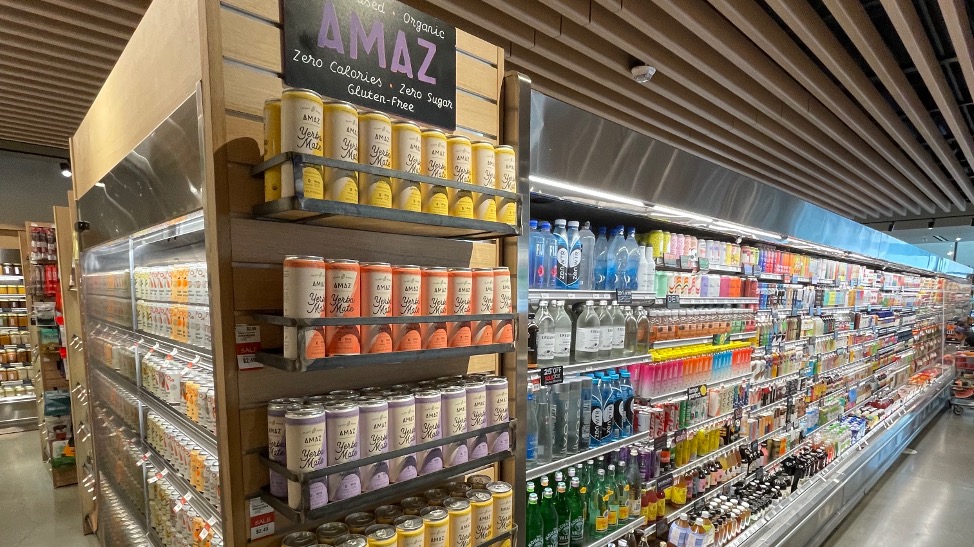
Gravity's read on US market entry wasn't built from research about international founders. It was built by one. Gustavo Nader co-founded Amaz and took it from concept into premium U.S. retail — Erewhon, Whole Foods, and Sprouts across 400+ doors, plus Gelson's, Bristol Farms, and natural-channel independents nationwide — making the exact crossing this piece describes, from the outside in.
Every dimension in Gravity's diagnostic — consumer language, format fit, competitive positioning, claims, pricing, retail readiness — comes from that lived experience, not a generic framework retrofitted for international founders after the fact.
What to actually do about it
Start with a real question. Ask Gravity is free for your first question, no account required — try something specific: "Does our claim read as differentiated or dated in the US?" or "Which of our home-market claims won't survive a US retail buyer?"
If you're ready for the full read, a Gravity Scan runs the complete diagnostic for $500 — generated in minutes, returned as a Gravity Scan Brief, and scoped to the U.S. market specifically. And if you're heading into a real product, launch, retail, or capital decision, the Reviewed Gravity Brief adds personal review from Gustavo Nader, sharper strategic interpretation, and a live hour walking the findings together.
Shelf jetlag doesn't go away on its own, and it doesn't announce itself before it's expensive. But it's checkable — for a fraction of what finding out the hard way costs.
See the full US-entry diagnostic built around this exact question, or ask Gravity yours first — free.
See the US-entry page →
COMMENTS